
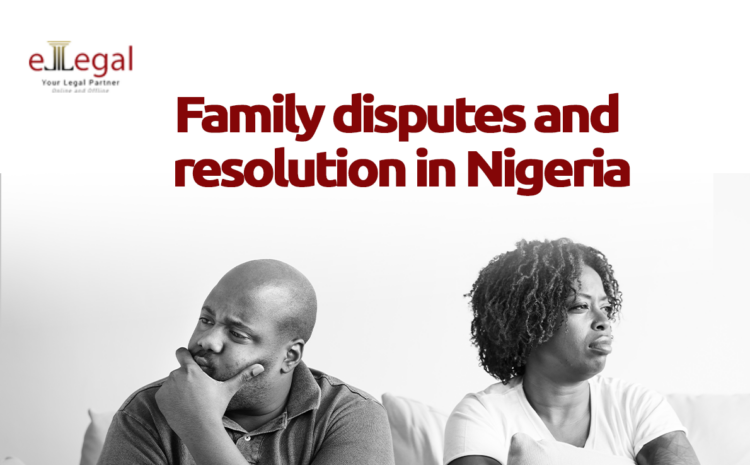
Family disputes can be emotionally and financially draining, often affecting not only the immediate parties involved but also children and extended relatives. In Nigeria, a diverse society with various religious and customary practices, resolving family disputes requires a nuanced understanding of applicable laws, cultural norms, and effective dispute resolution methods. This comprehensive guide explores the concept and process of Family Dispute Resolution (FDR), identifies the best practices in Nigeria, outlines Nigerian family law and court structures, and explains why our firm is uniquely positioned to assist clients in these matters.
What Is Family Dispute Resolution?
Family Dispute Resolution (FDR) encompasses a spectrum of alternative dispute resolution (ADR) techniques designed to help family members settle conflicts outside the adversarial court process. FDR aims to:
- Promote constructive dialogue
- Preserve relationships
- Minimize emotional strain
- Reduce costs and court backlog
Common forms of FDR include mediation, conciliation, collaborative law, and, in limited contexts, arbitration. Unlike litigation, FDR prioritizes mutual respect and participation, empowering parties to reach amicable agreements on issues such as divorce, child custody, maintenance, and property division.
Nigerian Family Law
Family law in Nigeria is multifaceted, reflecting the country’s diverse religious and customary systems. Key legislative frameworks and legal sources include:
- Matrimonial Causes Act (Cap M7, Laws of the Federation of Nigeria 2004)
- Governs divorce, judicial separation, and ancillary relief for non-Muslim spouses.
- Prescribes grounds for divorce (e.g., adultery, cruelty, desertion for two or more years).
- Defines property distribution principles and spousal support (maintenance).
- Matrimonial Causes (Northern States) Act (Cap M6, Laws of Northern Nigeria 1960)
- Applies to non-Muslim residents of Northern states.
- Similar provisions to the federal Matrimonial Causes Act but adapted for regional legal structures.
- Marriage Act (Cap M6, LFN 2004) and Marriage Act (Northern Nigeria) Cap M3, Laws of Northern Nigeria 1960
- Regulate formal civil marriages, registration procedures, and formalities.
- Family Homes and Succession Act (FHSA) 2017
- Applies to Southern states (e.g., Lagos, Abia, Imo, Ekiti, and others that have adopted it).
- Protects spouses’ rights to occupy marital homes upon dissolution or death.
- Recognizes both customary and Christian marriages for succession and inheritance.
- Administration of Muslim Law Acts (Various States)
- Govern marriage, divorce, custody, and inheritance for Muslim couples in states that adopt Sharia.
- Courts apply Fiqh principles alongside statutory provisions.
- Children’s Rights Act 2003 (adopted by some states)
- Safeguards children’s welfare, providing standards on child custody, care, and maintenance.
- Requires courts to prioritize the best interests of the child in all decisions.
Family Dispute Resolution Process
While procedures vary depending on the chosen method, the FDR process generally follows these steps:
- Initial Consultation and Intake
- Intake Interview: The facilitator (mediator or conciliator) meets each party either jointly or separately to understand the dispute’s background, clarify expectations, and explain confidentiality and procedural rules.
- Conflict Assessment: The facilitator evaluates whether the dispute is suitable for ADR. Certain issues such as ongoing domestic violence may require protective or judicial intervention rather than mediation.
- Agreement to Mediate
- Mediation Agreement: If mediation is chosen, parties sign a written agreement outlining the mediator’s role, confidentiality terms, session fees, and ground rules for respectful communication.
- Information Gathering and Exchange
- Document Exchange: Parties exchange relevant documents financial statements, school records, and property documentation to ensure transparent decision-making.
- Disclosure Requirements: Full disclosure is mandatory under Nigerian ethical guidelines. Hiding assets or misrepresenting information can invalidate any settlement.
- Joint Mediation Sessions
- Opening Session: The mediator sets the tone, outlines objectives, and allows each party to present their perspective.
- Issue Identification: Parties list disputed issues, e.g., child custody, spousal maintenance, division of matrimonial property.
- Negotiation and Problem-Solving: Through guided discussion, parties explore underlying interests and brainstorm options. The mediator ensures balanced participation and neutrality.
- Drafting and Reviewing Settlement Terms
- Memorandum of Understanding (MOU): Once consensus is reached, the mediator drafts an MOU summarizing key agreements (custody schedule, maintenance amount, property division, etc.).
- Legal Review: Each party’s attorney reviews the MOU to ensure compliance with Nigerian law and the parties’ rights.
- Formalization and Court Approval (if needed)
- Consent Judgment: If parties wish to make the agreement legally binding, they file a motion for a Consent Judgment in the appropriate court (e.g., High Court or Family Court), which converts the MOU into an enforceable court order.
- Enforcement Mechanism: Upon court approval, the settlement carries the same weight as a judicial decree. Any future breach can be litigated.
- Post-Settlement Follow-Up
- Review Mechanisms: Parties may include periodic reviews (e.g., every two years) to adjust terms based on changed circumstances (e.g., remarriage, income fluctuations).
- Dispute Prevention: The mediator may recommend parenting plans, financial oversight agreements, or ongoing counseling to minimize future conflicts.
Best Family Dispute Resolution Methods
Choosing the most suitable FDR method depends on the nature of the dispute, the parties’ relationship, and their willingness to collaborate. Below are the primary models used in Nigeria:
- Mediation
A neutral third party (mediator) facilitates communication, helping parties find common ground.
Strengths:
- Encourages open dialogue and mutual understanding
- Confidential and informal
- High compliance rates, as parties craft their own solutions
- Cost-effective and time-efficient
- Conciliation
Similar to mediation, but the conciliator takes a more active role in suggesting settlement terms.
Strengths:
- Useful when parties need structured guidance
- Balances neutrality with solution-oriented proposals
- Often favored in communities where direct judicial intervention is less accessible
- Collaborative Law
Each party hires a lawyer specifically trained in collaborative practice; the parties and lawyers agree to resolve disputes without court intervention.
Strengths:
- Lawyers commit to non-adversarial advocacy
- Structured four-way meetings ensure transparency
- Allows for creative, customized solutions beyond legal remedies
- Arbitration (Limited Use)
A private arbitrator or panel renders a binding decision after hearing evidence.
Strengths:
- Decisions are final and enforceable like court judgments
- Suitable for high-value property or inheritance disputes where parties want a quicker resolution than court
- Parties lose direct control over outcome, so it’s less common in sensitive family issues
Nigerian Family Court System
The resolution of family disputes takes place in specialized or general courts, depending on the state and the nature of the dispute:
- Family Courts (e.g., Lagos State Family Court)
- Established under the Lagos State Family Court Act 2007 and similar enactments in other states (e.g., Akwa Ibom, Cross River).
- Jurisdiction includes child custody, maintenance, domestic violence, and “child welfare” matters.
- Emphasizes conciliation and mediation; judges are empowered to refer matters to mediation panels before proceeding to trial.
- High Courts (State High Courts)
- Handle divorce petitions, custody, and property disputes under the Matrimonial Causes Act.
- Can order interim spousal support, child maintenance, and temporary custody.
- Magistrate Courts
- May hear certain family-related matters like maintenance orders or breaches of interim orders.
- Sharia Courts of Appeal & Customary Courts
- In Northern states, Sharia Courts address Muslim family law issues, marriage, divorce, inheritance, which are all based on Islamic jurisprudence.
- Customary Courts address customary (native law and tradition) marriages and disputes in areas where customary law is still prevalent.
Family Dispute Resolution Process in Nigeria
Given the legal framework, an effective dispute resolution strategy in Nigeria often combines ADR methods and litigation, as follows:
- Pre-Litigation Mediation/Conciliation
- Parties attend mediation sessions often court-referred to explore settlement before filing a court petition.
- Court-annexed mediation is mandatory in many jurisdictions (e.g., Lagos) for child custody and maintenance cases.
- Filing Court Petitions
- If mediation fails, a spouse may file a divorce petition under the Matrimonial Causes Act (or Northern Act).
- Grounds must be established (irretrievable breakdown, adultery, unreasonable behavior, etc.).
- Preliminary Court Directions
- Courts issue interim orders on custody, maintenance, or occupation of the marital home pending final hearing.
- Parties exchange financial affidavits and discovery documents.
- Evidence & Hearings
- Both parties call witnesses, present evidence (medical records, photographs, bank statements).
- Expert witnesses (e.g., child psychologists) may be called in custody disputes.
- Judgment & Consent Orders
- Courts grant Decree Nisi (interim divorce) and later Decree Absolute (final divorce) if grounds are proven.
- Parties may submit a consent judgment reflecting a mediated or negotiated settlement.
- Post-Judgment Enforcement
- Custody enforcement (e.g., child relocation issues) and maintenance enforcement may involve contempt proceedings if orders are breached.
- Variation applications allow modification of maintenance or custody orders based on changed circumstances.
Conclusion
Family disputes in Nigeria span a broad spectrum of legal, religious, and customary contexts. Family Dispute Resolution (FDR) through mediation, conciliation, or collaborative law serves as the preferred first step, preserving relationships and minimizing stress. When court intervention is necessary, specialized Family Courts and High Courts apply the Matrimonial Causes Act, Family Homes and Succession Act, and other relevant statutes to resolve disputes fairly.
At eLegal Consultants, we pride ourselves on our deep expertise in Nigerian family law, our network of professional mediators, and our track record of achieving timely, cost-effective resolutions. Our multidisciplinary team includes lawyers experienced in civil, Sharia, and customary family law, ensuring we can tailor solutions to every client’s unique background. By combining:
- Proactive ADR facilitation,
- Rigorous legal representation in Family Courts, and
- Comprehensive post-settlement support
We help families navigate these challenging times with dignity, compassion, and clarity. Let us be your trusted partner in achieving a fair, lasting resolution. Contact us today for a free consultation today.