
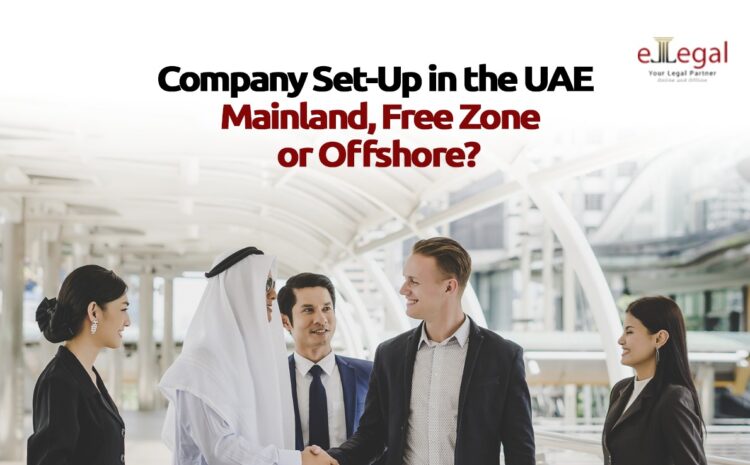
When you are starting your own business in the UAE, It is important to understand the different jurisdiction types so you can choose the one that best suits your business activity and goal. Registering your business can be complicated, however, the UAE makes it easy for every entrepreneurial structure and setup through three main economic jurisdictions which are the:
- Free Zones
- UAE Mainland
- Offshore
At the end of the first half of 2020, the UAE had 405,000 companies, based on the valid business licenses statistics. Over the past four years, this number has grown to 1.021 million registered companies as of mid-2024, scoring a growth of 152%, according to the statistics of the UAE’s National Economic Register.
The UAE offers three primary types of company setups — Mainland, Free Zone, and Offshore. Each structure serves a unique purpose, comes with different ownership rules, and offers specific advantages depending on your business goals. Understanding these three options is key to ensuring you choose the ideal setup for your operations, growth strategy, and market focus.
There are certain things to consider during the business registration in free zone and mainland, as well as offshore jurisdictions. The Free Zone is no doubt that the UAE is a gateway to business growth with its zero-tax policies and bustling environment that promotes technology-inbuilt business.
In this post, eLegal Consultants will help you differentiate between mainland company formation in UAE, Free Zone Company formation in UAE, and Offshore Business Setup in Dubai.
- Mainland Company Formation in UAE
A mainland company is registered under the UAE Department of Economic Development (DED), which gives businesses the free will to operate anywhere across the UAE and internationally. What this means is that this makes mainland companies ideal for businesses that want maximum operational flexibility in and out of the UAE, access to local markets, and the ability to expand within the UAE without restrictions.
Primary Features of Mainland Company Formation in UAE
- Recent UAE reforms allow foreign investors full ownership in most business activities, cancelling the need for a local sponsor like in many cases.
- Mainland companies can trade directly within the UAE market, work with government entities, and operate across all Emirates which is what all business thrive with.
- Whether you are in retail, services, manufacturing, contracting, or consultancy, mainland structures accommodate a wide range of activities.
- Mainland businesses enjoy operational flexibility and are free to establish multiple branches throughout the UAE and use any currency where applicable.
The mainland company is ideal for businesses that plan to operate locally, work with government contracts, or expand across multiple Emirates in the UAE.
Free zones are designated economic areas that offer 100% foreign ownership, tax exemptions, and simplified company formation. With more than 45 free zones across Dubai, Abu Dhabi, Sharjah, and other Emirates, entrepreneurs can choose a free zone tailored to their industry — including technology, logistics, media, healthcare, manufacturing, finance, and trading.
Features of Free Zone Company Setup in UAE
- 100% Foreign Ownership (No Local Partner Required)
- Corporate & Personal Tax Benefits including 0% personal tax and exemptions on import/export duties.
- Fully Integrated Business Infrastructure with office spaces, warehouses, and shared facilities.
- Quick Licensing & Fast Company Registration: Many free zones issue licenses within a few days.
- Ideal for International Trade: Free zone companies can operate globally but require a distributor or mainland branch to trade within the UAE.
The free zone company is best for Entrepreneurs focused on global business, e-commerce, logistics, professional services, tech startups, and international trading.
An offshore company is set-up to conduct international business outside the UAE while benefiting from the UAE’s stable regulatory framework and banking system. This type of setup is not permitted to conduct business within the UAE but is ideal for asset protection, wealth management, holding companies, trademark ownership, and multinational business structures.
Key Features of Offshore Company Setup UAE
- 100% Foreign Ownership & High Confidentiality
- No Office Requirement & Minimal Reporting Obligations
- Ideal for International Operations & Investment Holding
- Tax-Efficient Structure Suitable for Global Diversification
Offshore companies are typically registered in jurisdictions such as JAFZA Offshore, RAK ICC, and Ajman Offshore, each offering unique advantages depending on business goals.
It is best for asset holding, international trading, investment companies, property ownership structures, and multinational operations.
Choosing the Right UAE Company Formation Structure
Choosing between Mainland, Free Zone, and Offshore depends on several factors:
- Your target market (local vs. global)
- Business activity and licensing needs
- Ownership preferences
- Office space requirements
- Visa and staffing needs
- Budget and long-term expansion goals
This decision shapes the foundation of your business, which is why expert guidance from eLegal Consultants is crucial for a seamless company formation process.
Conclusion
Understanding the differences between Mainland, Free Zone, and Offshore company setups is essential for making the right business decision in the UAE. Each structure offers unique benefits and choosing the right one can impact your company’s growth and market access.
Whether you’re exploring mainland company setup in UAE, Free Zone Company Formation in UAE, or Offshore Company Formation UAE, eLegal Consultants is your experts guide on taking you through every step. Contact us for a free consultation today.